
Powering West Virginia's Next Economy
Intelligence centers — the advanced data facilities driving AI, cloud services, and the modern digital economy — are coming to West Virginia. Here are clear, factual answers to the concerns most often raised about what they mean for our water, our communities, and our wallets.
West Virginia has a generational opportunity to compete for billions in private investment, thousands of jobs, and a stronger tax base for every county. That opportunity depends on giving companies the regulatory certainty they need to build here instead of somewhere else — while keeping every environmental, utility, and public-safety protection fully in place.
Below, we separate fact from fiction on the five questions we hear most.
Myth vs. Reality
Quick, clear answers to the most common concerns
Each card below pairs a common myth with the facts, including the laws, numbers, and comparisons that put the issue in context.
Water Usage

Intelligence centers will drain West Virginia's water.
Water use is technology-driven and small compared to existing industries.
-
Many facilities use little or no water at all:
- Air-cooling systems use zero water
- Closed-loop systems recirculate and reuse the same water
- Some facilities run on recycled or non-potable water sources
- Even high-end estimates are small in context — see the comparison below.
- A mid-sized intelligence center using roughly 300,000 gallons per day uses less water than a typical 18-hole golf course.
| Industry | Annual water use |
|---|---|
| Intelligence center (1 GW evaporative, high-end) | ≈ 1.09 billion gal |
| Mining | 13.5 billion gal |
| Chemical industry | 131.7 billion gal |
| Thermoelectric industry | 375.7 billion gal |
Bottom line Water impact is manageable and far smaller than the major legacy industries already operating in West Virginia.
Environmental Standards

Intelligence centers are exempt from environmental protections.
Nothing in HB 2014 or its rules exempts intelligence centers from any state or federal environmental law.
- Air quality standards still apply
- Water discharge permits are still required
- Federal Clean Air Act and Clean Water Act standards still apply
- State environmental permitting and enforcement remain fully in place
Bottom line Zoning certainty is not environmental deregulation. Every environmental law still applies.
Local Control

The state is forcing intelligence centers on counties and eliminating local control.
HB 2014 provides siting certainty because billion-dollar projects will not come to a state where a patchwork of overlapping local ordinances can delay or block development.
Large-scale investments require predictable rules. When approvals can be overturned by shifting local politics, companies invest elsewhere — and they have been. Other states are already capturing billions in private investment, expanding their tax bases, strengthening schools, and upgrading infrastructure while less competitive states fall behind.
- Many communities want the statewide tax relief and shared revenue
- State-level siting authority provides the consistency and certainty needed for large-scale investment that benefits the entire state
- This is not deregulation — environmental standards, air and water laws, and utility cost protections all still apply
Bottom line Without regulatory certainty, these projects do not come — and neither do the jobs, revenue, tax relief, or infrastructure investment.
Electricity Costs
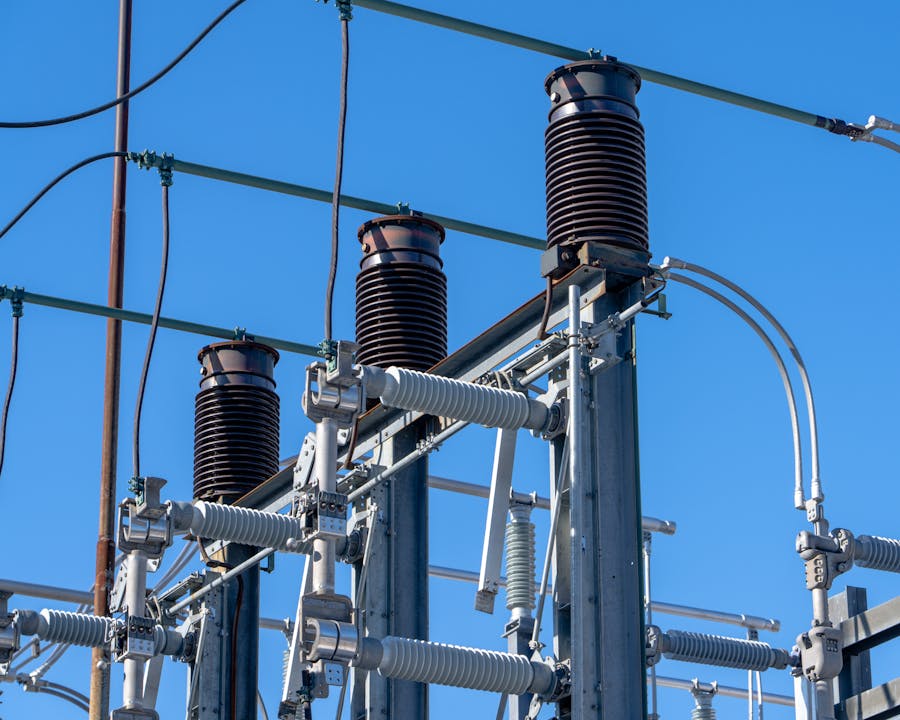
Intelligence centers will drive up your electric bill.
Large, stable customers can help stabilize or lower costs — and they must pay for their own build-out.
-
When fixed costs get spread out:
- Utilities recover grid costs regardless of demand
- More electricity sold means costs are spread over more kilowatt-hours
- Per-unit cost pressure on households can decline
-
HB 2014 protects ratepayers:
- Utilities cannot pass microgrid construction costs to existing customers
- Transmission upgrades must be borne by the intelligence center
- New generation infrastructure must be funded by the project
- Grid interconnection costs cannot be shifted to households
- 24/7 demand helps finance new power generation, supports grid investment, drives economies of scale, and strengthens overall grid stability
Bottom line If new electricity infrastructure is required, the project pays — not families, and not small businesses.
Where Does the Money Go?

The state keeps 75% of the money.
The revenue is broadly distributed and reinvested back into West Virginians, their counties, and their infrastructure.
See the full breakdown in the next section.
Revenue Distribution
How every dollar is divided
A reinvestment strategy — not a revenue hoard
Half of every dollar goes directly back to taxpayers through a personal income tax reduction that benefits every West Virginian. The rest strengthens counties and the infrastructure we all depend on.
Economic Enhancement Grants help fund:
- Water and sewer upgrades
- Industrial site development
- Community infrastructure projects
The Electric Grid Stabilization Fund supports:
- Grid planning and reliability
- Infrastructure upgrades
- Long-term system resilience
The Bigger Opportunity
Intelligence centers are a chance to diversify West Virginia's economy, modernize infrastructure, and put real money back in every resident's pocket.
Eliminate the Income Tax
A realistic pathway to phase out West Virginia's personal income tax entirely.
High-Wage Careers
Hundreds of permanent jobs averaging roughly $100,000 per year.
Construction Jobs
Thousands of construction jobs lasting years during build-out.
Economic Diversification
Growth beyond legacy industries into the digital economy.
Modernized Grid
New investment in generation, transmission, and long-term reliability.

West Virginia can compete nationally — but only if decisions are based on facts, not fear.
Learn more about HB 2014 and the state's intelligence center framework.